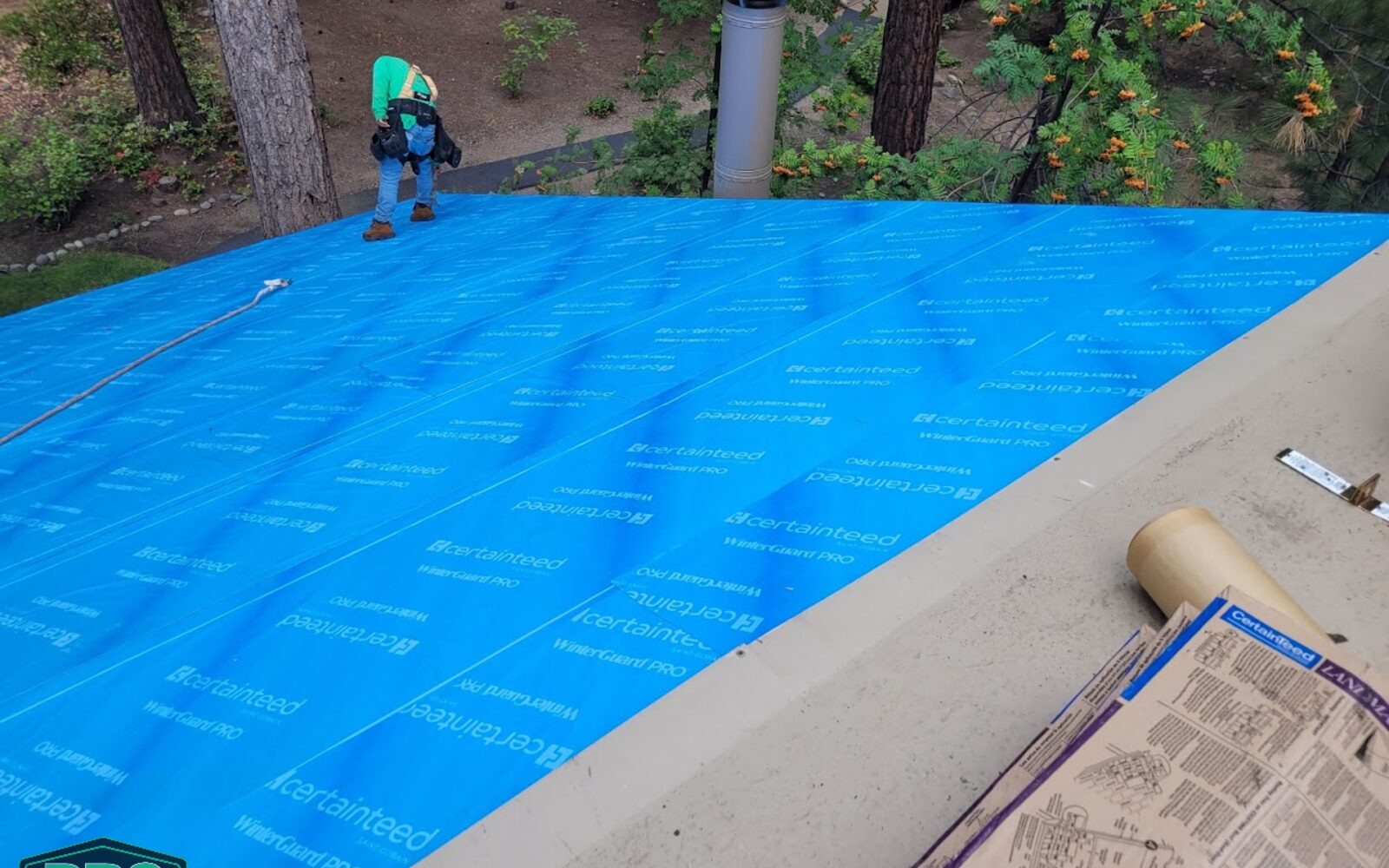
Homeowners insurance covers a roof leak when a covered event opened the roof and the water followed. It generally does not cover a leak that arrived because the roof wore out. The water on your ceiling looks the same either way, which is why so many owners are surprised by the answer: the question an insurer asks is not how bad the damage is, but what let the water in and when.
This page explains how that line is drawn, what sits on each side of it, and what evidence decides borderline cases. It is general information about how these policies are written. Your own policy wording governs your situation, and this site does not file, negotiate or handle claims.
The line the policy draws
Almost every homeowners policy pays for loss caused by a sudden, accidental event and excludes loss caused by wear, deterioration and the gradual action of water. A storm that strips shingles is the first kind. Twenty years of sun hardening the sealant until the covering stops shedding water is the second.
That means the useful question is never does my policy cover roof leaks. It is what caused this one, and can that cause be tied to a date. Everything else follows from the answer.
Usually covered
- Wind lifting, creasing or removing the covering, and the rain that then enters.
- Hail breaking the covering or the flashings.
- A tree limb or windborne debris puncturing the roof.
- The weight of ice, snow or sleet, where that is a named peril.
- Fire and the water used to put it out.
- Vandalism, and in many policies damage from the weight of rainwater that collected because of a covered loss.
Usually not covered
- Wear, deterioration and a covering at the end of its service life.
- Continuous or repeated seepage over weeks or months, which most policies exclude by name.
- Rust, rot, mold and the long term consequences of water that has been getting in for a while.
- Faulty workmanship or defective materials from a previous installation, though damage that results is sometimes treated separately.
- Lack of maintenance, where the insurer can show the condition was visible and ignored.
- Settlement and movement of the structure.
What homeowners insurance covers on a roof sets out the same framework across the whole roof rather than for leaks alone.
Why the cause matters more than the damage
Two houses have identical ceiling stains. In the first, a storm two nights ago creased a run of shingles, the weather service recorded a gust, and a roofer has photographed the lifted tabs. In the second, the ceiling has been staining faintly every wet winter for three years and the owner has finally called.
The first is a claim about an event. The second is a claim about a condition, and conditions are what policies exclude. The difference is not fairness or severity. It is simply which of the two things the contract was written to pay for.
That is also why the gap between noticing and reporting matters. Delay gives an insurer room to argue that the damage developed over time, and most policies require prompt notice as a condition. Reporting early costs nothing and protects the position.
Interior damage, and why it is a separate question
The roof and what is under it are often handled by different parts of the policy. The roof covering itself may be settled with depreciation applied, while the ceiling, insulation, flooring and contents fall under other provisions with different limits.
In most policies, interior water damage is covered where the roof opening that let the water in was itself covered. If the opening is excluded, the water that came through it usually is too. That single dependency is why establishing the cause on the roof is the work that decides the whole claim, rather than a technicality to settle later.
What decides a borderline case
Four pieces of evidence do most of the work, and three of them are cheaper to collect before a loss than after.
| Evidence | What it establishes |
|---|---|
| A dated inspection report | The roof’s condition on a specific date |
| Weather records for the address | That an event happened, and how severe |
| Photographs of the opening | That the event, not wear, created the path |
| Maintenance invoices | That the duty to maintain was met |
An owner who holds a condition report from before the storm and photographs of the damage after it has removed most of the argument. An owner with neither is relying on an adjuster’s reading of an aging roof, and that reading tends to favor the exclusion.
Roof age and condition covers how age alone changes the way a roof is underwritten and settled, which is a related question and not the same one.
Mold, rot and the damage that arrives later
A leak that ran for a while brings consequences that policies treat separately and often restrict: mold, mildew, rot and the deterioration of structure that has been damp. Many policies cap mold remediation at a modest sublimit or exclude it where it resulted from a long term leak.
The practical point is that the clock matters twice. It decides whether the leak itself is covered, and it decides how much of what the leak caused is covered. A leak dealt with quickly is a smaller claim and a stronger one.
How the payout is calculated once the leak is covered
Coverage is one question and the amount is another. Two provisions do most of the work. The first is whether the roof covering is settled at replacement cost, which pays what it costs to put back, or at actual cash value, which deducts for the age and condition of what was there. The second is the deductible, which on wind and hail losses is often a percentage of the insured value rather than a flat figure, and on a modest leak that percentage can exceed the repair.
Many policies in storm exposed regions also attach a roof payment schedule that reduces the settlement on an older covering regardless of cause. Those provisions are listed on the declarations page and in the endorsements, not in the main policy text, which is why owners meet them for the first time after a loss. Reading them now takes ten minutes and changes what you expect later.
What to do when a roof leak starts
- Note the date and the weather. Write it down the same day.
- Photograph everything inside before moving or drying anything.
- Take reasonable steps to prevent more damage, and keep the receipts. Policies expect this.
- Get the roof looked at and the cause photographed, by somebody who will put it in writing.
- Report promptly, whatever you think the outcome will be. Notice is a condition in most policies.
- Do not complete a permanent repair until the damage and the cause are documented.
Where to go next
If you want the mechanics of filing rather than the question of coverage, the roof insurance claim process covers it from notice to settlement. If your roof is older and you want to know how that changes things before anything goes wrong, read roof age and condition. And if the honest answer is that nobody knows what state your roof is in, a dated condition report is the document that will matter most later, and it is cheapest to obtain while nothing is leaking.
Common questions
What is the difference between sudden damage and gradual damage?
Sudden damage happens at an identifiable moment, usually in an identifiable event: a storm lifts shingles, a branch punctures the roof. Gradual damage accumulates, with no single moment and no single cause. Most homeowners policies are built to pay for the first and to exclude the second.
- Sudden damage has a date, and often a weather record
- Gradual damage has a period rather than a date
- Policies commonly exclude wear, deterioration and seepage
- The same wet ceiling can be either, depending on cause
- Evidence of the moment is what separates them
This single distinction explains most denied roof leak claims. It is not that the insurer disputes the water; it is that the policy was never written to pay for a roof wearing out. Read the exclusions section of your own policy for the wording on wear and tear, deterioration, and continuous or repeated seepage, and read the water damage section too, because interior cover often turns on whether the roof opening itself was covered. If the wording is unclear, ask your agent to confirm the position in writing.
Does insurance cover a roof leak from wind driven rain?
It depends on the wording and on whether the wind opened the roof first. Many policies cover interior water damage from rain only where wind or hail created an opening the rain then entered. Rain blown in through an intact roof or a gap that was already there is treated differently.
- Look for the opening created by wind or hail wording
- An opening caused by the storm is the usual trigger
- A pre existing gap is not an opening created by wind
- Some policies exclude wind driven rain specifically
- Reported wind speed for your address matters here
The practical consequence is that documenting the opening matters more than documenting the water. Photographs of lifted or missing shingles, of broken flashing, of the gap itself, all dated, are what connect the rain inside to the storm outside. A ceiling stain on its own does not do that work. If you cannot safely photograph the roof, that is a reason to get somebody up there promptly rather than a reason to skip it.
Can a claim be denied because the roof was not maintained?
Yes. Most policies carry a duty to maintain the property, and a roof that has been visibly neglected gives an insurer grounds to argue the loss was preventable rather than sudden. Clogged drains, missing shingles left unreplaced and failed sealant are all cited in that argument.
- Neglect arguments turn on what was visible and ignored
- Maintenance records answer the argument before it starts
- Prior repairs that were never completed count against you
- An old roof is not neglected, but it is examined harder
- Keeping receipts and reports is the cheapest defense
The defense against this is documentary and has to exist before the loss. Dated inspection reports, invoices for work done, and photographs taken when nothing was wrong make a maintained roof provable. Many owners have maintained their roof well and simply cannot show it. An annual or twice yearly inspection report is the single most useful document to hold, because it establishes condition on a date and does so independently.
Are ice dam leaks covered by homeowners insurance?
Often, though the wording varies and so does the reasoning. An ice dam forms when meltwater refreezes at a cold eave and backs up under the covering, and because it is driven by a weather condition rather than by wear, many policies treat the resulting water damage as covered.
- Weight of ice, snow or sleet is a named peril in many policies
- Resulting interior water damage is often included
- Repeat ice damming invites a maintenance argument
- Ventilation and insulation are the underlying cause
- Check your own policy wording rather than assuming
The complication is repetition. An ice dam that forms every winter in the same place is a building problem, usually warm air leaking into a roof space that should be cold, and an insurer can reasonably argue that a known recurring condition is maintenance rather than a sudden event. Dealing with the cause protects both the building and the claim position. Where the policy excludes it, that exclusion is normally explicit, so it is worth reading before winter rather than during it.
What should be documented when a roof leak starts?
The date, the weather, the water and the roof, in that order. Note when you first saw it and what the weather had been doing. Photograph the inside damage before anything is moved or dried. Then get the roof looked at and photographed, because that is where the cause lives.
- Date and time you first noticed water
- Weather on that date, including any storm
- Photographs of ceilings, walls and contents before cleanup
- Photographs of the roof itself, taken safely
- Receipts for anything done to stop further damage
Policies also impose a duty to prevent further damage, so reasonable temporary measures such as a tarp or a bucket are expected rather than discouraged, and their cost is often recoverable. Keep the receipts. What to avoid is a permanent repair before the damage has been documented, because the evidence of the cause disappears with it. Document first, protect second, repair third, and keep every photograph with its date intact.