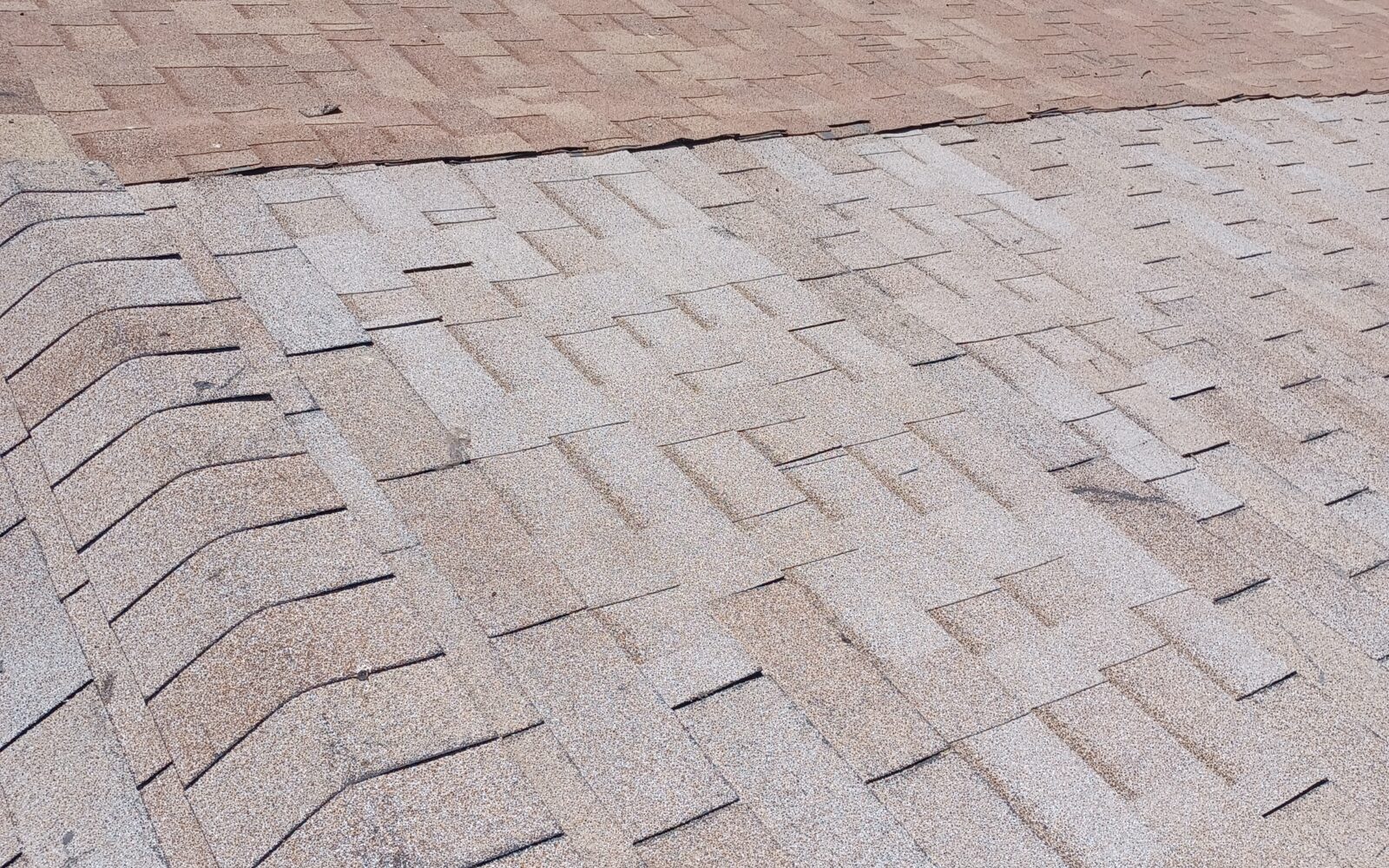
When carriers decline a house, it is usually the roof covering they are declining rather than the house, and they decline it for a reason somebody has written down. Finding out what that reason is, dealing with it, and having the result documented independently is the route back into the standard market. Everything else is a workaround.
That is worth saying plainly because owners often reach for the largest answer first. A full replacement always works and it is frequently more than the objection required. The cheapest version of this problem is the one where you find out what the underwriter is looking at before deciding what to spend.
Find out what is actually being objected to
Ask the agent or the carrier which condition caused the decline, and ask for it in writing. The list is shorter than people expect:
- Covering at or past the end of its service life
- Missing, lifted or displaced covering
- Exposed underlayment or deck
- Failed flashings, valleys or penetration details
- Active leaks or interior water staining
- Moss, organic growth or debris loading
- Layers beyond what local code allows
- Tarps or temporary repairs still in place
Several of those are repairs rather than replacements. A tarp still on a roof will stop any carrier writing a policy, and removing the tarp by completing the permanent repair can change the answer on its own.
Roof age and home insurance covers how carriers treat age specifically, which is the one item on that list you cannot repair.
Fix the named defect, then document it
The order is important. Have the work done, then have the roof looked at by somebody who is not the contractor who did it, and ask for a report that states the condition, the work carried out and the date. An invoice proves money was spent. A report proves the roof is now in a particular condition, which is what an underwriter is being asked to accept.
Roof age inspection and condition assessment covers what that document contains, and roof inspection for insurance: condition report is the version written for an underwriter rather than for an owner.
The arrangements in between
| Route | What it does | What to check |
|---|---|---|
| Roof exclusion endorsement | Insures the house, excludes the roof covering | Whether the lender accepts it, and how to lift it |
| Actual cash value on the roof | Full cover, depreciated roof settlement | What that settlement would actually pay |
| Higher wind or hail deductible | Keeps the policy affordable and in force | The dollar figure, not the percentage |
| Surplus lines carrier | Writes risks the standard market declines | The form wording and the carrier’s rating |
| State residual or FAIR plan | Last resort cover where nothing else is available | Scope of cover, and mortgage conditions |
Each of those is a trade rather than a solution, and each is reasonable for a season while the roof is dealt with. What none of them should be is permanent, because every one of them either costs more or covers less than a standard policy on a sound roof.
Shop the market properly
Carriers differ widely in how they underwrite roofs. One will decline a roof at a stated age regardless of condition; another will write it on the strength of an inspection. An independent agent who places business with several carriers is worth more here than a direct quote, because the useful question is not what a policy costs but which carriers will consider this roof at all.
Ask the agent two things: which carriers in your state underwrite older roofs on condition rather than on age, and what documentation each of them wants to see.
Keep the paperwork from here on
- The report that supported the new policy, with its date
- The repair invoice, with the scope described
- Dated photographs of the finished roof
- The declarations page, with the roof terms read and understood
- A diary note for the next renewal, a month ahead of it
A roof that was once declined attracts attention at every renewal. The file is what turns that from an annual risk into an annual formality. Homeowners insurance cancelled because of the roof covers what to do if a notice arrives anyway.
Where to go next
If a notice of cancellation or non renewal has already been issued, the timescale matters and that page is the one to read first. If the question is whether a replacement would pay for itself in premium terms, does a new roof lower your home insurance sets out where a credit actually comes from.
This page explains how insurers generally approach roofs in poor condition. Your own state and carrier decide what is available to you, and nothing here is insurance or legal advice.
Common questions
Will an insurer cover a roof that has been repaired rather than replaced?
Often yes, where the repair answers the specific objection and can be evidenced. Underwriters decline roofs for named reasons: missing covering, exposed underlayment, active leaks, failed flashings, moss or a surface at the end of its life. A repair that removes the named reason usually removes the decline.
- Ask which defect caused the decline, in writing
- Repair that defect rather than the whole roof
- Have the work invoiced with a description of the scope
- Get an independent report after the work, not before
- Reapply with the report and the invoice together
The sequence matters more than the spend. Owners often replace a whole roof on the assumption that nothing less will do, when the objection was two slipped sections and a failed valley. The only way to know is to ask for the reason. Carriers are generally willing to state it, and an agent who has placed similar risks will usually recognise what the underwriter is looking at.
What is a roof exclusion endorsement, and should I accept one?
It is an endorsement that removes cover for the roof covering while keeping the rest of the policy in force. It gets a house insured when the roof alone is the obstacle, and it means roof damage of any kind is yours to pay for while it applies.
- The house stays insured for fire, liability and other perils
- Roof covering damage is not covered while it applies
- Water entering through the roof may also be excluded
- A mortgage lender may not accept it
- Ask what it takes to have it removed later
Treat it as a bridge rather than a destination. Ask the carrier at the outset exactly what evidence would allow the endorsement to be lifted, because the answer is usually a replacement or a passed inspection, and knowing which turns an open ended exclusion into a plan with a finish line. Check with the lender before accepting one: a mortgage condition requiring full dwelling cover can make it unusable.
Can I get cover without a roof inspection?
Sometimes, and it is rarely the better route once a roof has been declined. An inspection is how an underwriter is given something other than the roof's age to rate on, and a policy written with no inspection tends to carry the restrictions a carrier applies when it cannot see what it is covering.
- Many carriers now inspect after binding, not before
- A post binding inspection can trigger a non renewal
- Your own report lets you fix problems first
- Aerial imagery is used widely, so the roof is seen anyway
- An old but sound roof benefits most from documentation
The change worth knowing is that carriers no longer need your cooperation to see the roof. Aerial and satellite imagery is used routinely at renewal, and a roof that looks poor from above gets looked at whether you commissioned anything or not. Having a dated independent report in hand means the conversation starts from a professional assessment rather than from a photograph taken from an aeroplane.
What does a state insurance plan cover when nobody else will write the policy?
Most states run a residual market, often a FAIR plan, which exists to insure property the standard market declines. Cover is typically narrower than a standard homeowners policy and the premium is usually higher, and it is designed as a last resort rather than a long term arrangement.
- Availability and rules differ in every state
- Cover is often limited, sometimes to named perils
- Liability and contents may need separate arrangement
- Your state insurance department publishes the details
- Reapply to the standard market once the roof is fixed
Two practical points. Check whether the plan satisfies your mortgage conditions, since a policy that omits a cover your lender requires creates a second problem. And treat the placement as temporary from the first day: note the date the roof work completes, gather the paperwork, and shop the standard market again. Residual market policies are not meant to be renewed indefinitely and are priced accordingly.
Does a surplus lines policy protect me the same way?
It covers the house, with two differences that matter. Surplus lines carriers are not bound by the state approved policy forms, so the wording can be narrower than a standard policy, and in most states they are not backed by the state guaranty fund if the carrier fails.
- Forms vary, so the wording must be read rather than assumed
- Guaranty fund protection usually does not apply
- Check the carrier's financial strength rating
- Confirm the policy satisfies the mortgage conditions
- Premium is typically higher than the standard market
None of that makes surplus lines a bad answer. It is often the only market that will write a house with an older roof, and a well rated surplus lines carrier is a reasonable place to be while the roof is dealt with. What it is not is an equivalent product bought at a higher price. Read the covered perils and the roof settlement basis before signing, since both are where the narrowing usually appears.